from 0 review
7 Days Trek
Specific Tour
Unlimited
English
Initiating from the west, the Shira route is one of the older and tougher among the Kilimanjaro routes to try, and is nearly identical to the Lemosho route. The uniqueness of this route is that the first section of the trail is not hiked, but rather starting from a higher altitude. In fact, the Lemosho route is the ‘new-and-improved’ version of the Shira route.
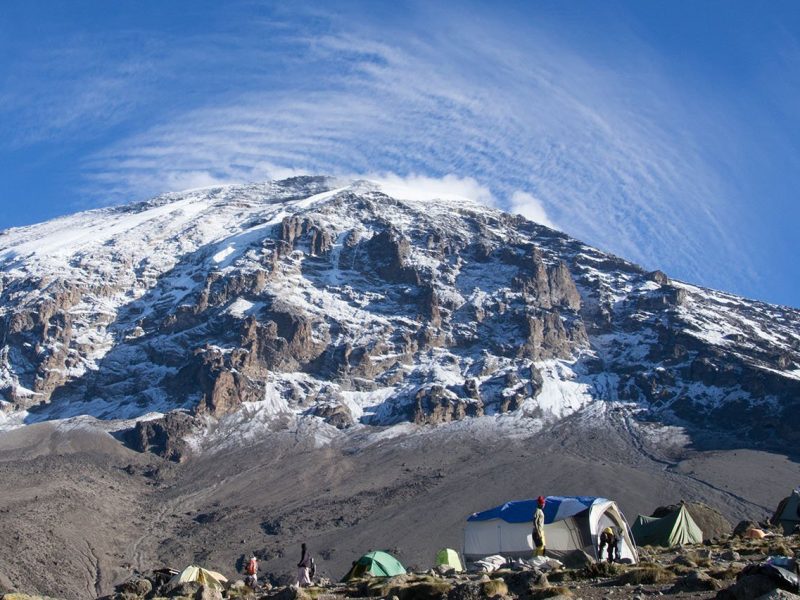
The Shira route approaches the summit of Kilimanjaro from the west and the descent is down though Mweka, in the southeast. It starts relatively high above sea level and is therefore a less frequented route as it offers a poorer acclimatization profile. The route takes six days minimum to complete, though seven or eight days of trekking is acclaimed, giving you an experience on your way to the summit.
You are expected to carry your own day pack, with only things which should be able to sustain you until you reach the next camp at the end of the day. You do not need to carry your personal backpack/ duffel pack - It will be carried by our porters.
No worries about that - this is a common concern. It is much better for your body if you proceed slowly and guides will permanently remind you about this (“pole-pole” - which means “slowly slowly”). By walking slowly, your body will much better acclimatize to high altitude. There is plenty of time allocated each day for the treks, even for those who like to go very slowly.
Some climbers may fall short of reaching the summit, but not at the expense of their overall experience. Even for those who never reached the top, the experience of the wonders of Kilimanjaro is very rewarding. If one or more members of the group decide they cannot continue, or if a guide deems it unsafe for an individual (or a group) to continue, they are escorted to the most convenient campsite or Hut. Our guides intimately know the network of shortcuts to escort climbers to safety, and they are trained to act quickly and calmly under any circumstance.
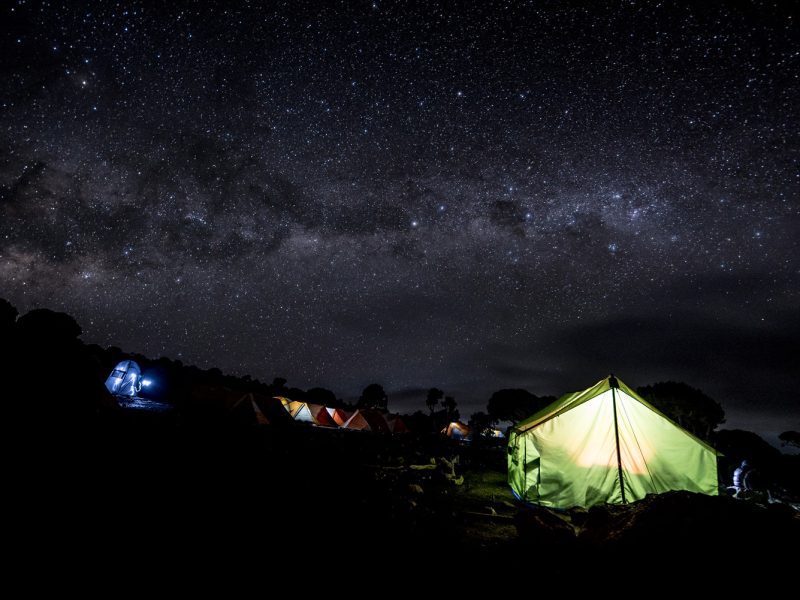
On the Marangu Route, there are simple basic Huts. The first 2 Huts sleep four people each and the last Hut is a dome-style with bunk beds. On all the other routes, you will sleep in 3 dome-style Tents, two people each. The Tents are modern and have an outer flysheet and large vestibules keep equipment from the elements. They are set up, broken down and carried- along with everything else- by our porters. There are public toilets set up at every campsite, but portable toilets are available upon request at the cost of $ 100 per group for the whole tour. Hot water is provided for each person every morning but No showers during trek There will be dining tents with chairs and tables where all meals will be served. Before any meal, we will provide soap and hot water for washing your hands
For each trek on the Mount a dedicated cook will be part of the logistical team. They are professional chefs and have the ability to prepare different kinds of dishes. Please see a sample page for Dietary Menu.
You shouldn't worry- You are in safe hands. Our guides are professionally trained to handle all sorts of distress and respond quickly and accordingly. They all have Wilderness First Aid Responder qualification and they will all time bring you to safety. They will directly call for an emergency evacuation if the situation worsens.
The tours are scheduled to start in Moshi, departing on Daily basis. However, circumstances like clients’ arrival time, activities to be done and client’s preference could affect the program. Our company is flexible for such arrangements and adjustments. Normally the program starts around 7:30 AM
The tours are scheduled to End in Moshi. You may also wish to be dropped outside Moshi at an extra cost depending on the place of drop off. However, our travel specialists will need to know your specific drop-off point prior to the hike to get aligned with the program